
Why Getting This Right Matters for Your Business
Used cooking oil is a controlled waste. Under the Environmental Protection Act 1990 and the Waste (England and Wales) Regulations 2011, every food business that produces it has a legal duty of care over how it's stored, handled and disposed of.
Getting it wrong isn't just an administrative issue — it can result in prosecution, fines, and damage to your Food Hygiene Rating. Getting it right is simple, and with a licensed collector in place, largely automatic.
After 18 years in this industry, Bio UK Fuels has seen the full range of disposal practices. This guide cuts through the confusion and sets out exactly what to do — and what to avoid.
The Dos
DO use a licensed waste carrier Always verify your collector holds a current Environment Agency waste carrier licence before agreeing any collection. You can check on the EA public register. Bio UK Fuels holds licence CBDU199369 and environmental permit EPR/GP3623PJ.
DO obtain a Waste Transfer Note for every collection A WTN must be completed and signed at every collection. It records the waste type, quantity, collector details and destination. You are legally required to keep copies for a minimum of two years.
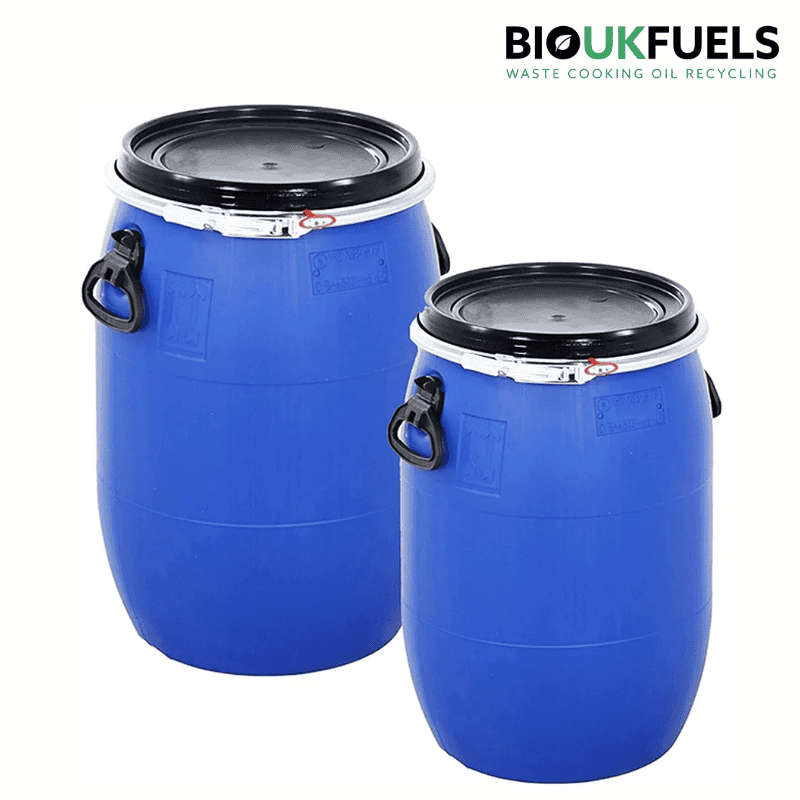
DO store oil in sealed, dedicated containers Used cooking oil must be stored separately from other waste in purpose-built, leak-proof containers. Keep them away from drains, watercourses, and food storage areas. Containers should be clearly labelled.
DO let oil cool before transferring it Never transfer hot oil — it presents a serious burn and fire risk, and can degrade container seals. Allow fryer oil to cool to below 50°C before draining.
DO segregate different oil types if required If you use both animal-based and vegetable-based oils, check with your collector whether they should be kept separate. Some end-use applications require segregation.
DO set a regular collection schedule Overflowing or overfull containers increase contamination and spillage risk. Agree a collection frequency that matches your output — weekly, fortnightly or monthly — and stick to it.
The Don'ts
DON'T pour used oil down the drain This is perhaps the most common — and most costly — mistake. Fats, oils and grease solidify in sewers, contributing to fatbergs and blockages. Water companies and councils actively pursue businesses responsible for blockages. Fines can reach £20,000 per incident.
DON'T put used oil in general waste bins This contaminates other waste streams and breaches your duty of care. Local authorities can issue fixed penalty notices to businesses found disposing of controlled waste in this way.
DON'T give oil to anyone without a waste carrier licence Handling waste to an unlicensed individual — regardless of their stated intentions — breaches your legal duty of care. If that person then disposes of it illegally, your business may remain liable.
DON'T allow oil to mix with water Water contamination significantly reduces the value of used cooking oil for recycling, and can cause violent reactions if heated. Ensure containers are kept dry and covered.
DON'T store oil near ignition sources Used cooking oil is flammable. Storage areas should be away from open flames, electrical equipment and heat sources, and should meet your local fire risk assessment requirements.
DON'T ignore the paperwork Losing your WTNs is not a minor oversight — it's a compliance breach. Keep records organised by date, ideally in a dedicated waste management folder, and retain for the required two years.
What Happens to Recycled Cooking Oil
Properly collected and recycled used cooking oil is processed into biodiesel — a clean-burning renewable fuel used in commercial vehicles and industrial machinery. It's one of the most carbon-efficient fuel sources available, benefiting from double counting credits under the Renewable Transport Fuel Obligation (RTFO).
This is why reputable collectors like Bio UK Fuels can offer completely free collection for businesses — the recycled product has genuine commercial value that offsets the cost of collection and processing. Nothing goes to landfill.
By using a licensed collector, you're not just staying compliant — you're directly contributing to the UK's renewable fuel supply.
Frequently Asked Questions
Filed under:Cooking Oil Disposal

Written by
Martin SimpkinsCo-founder of Bio UK Fuels in 2008. With 18 years in the industry, Martin helps commercial kitchens recycle used cooking oil legally and turn it into biodiesel.
More articles by Martin →Need your used cooking oil collected?
Free collection across England & Wales, and we pay you for 100 litres or more. Full Duty of Care paperwork every time.