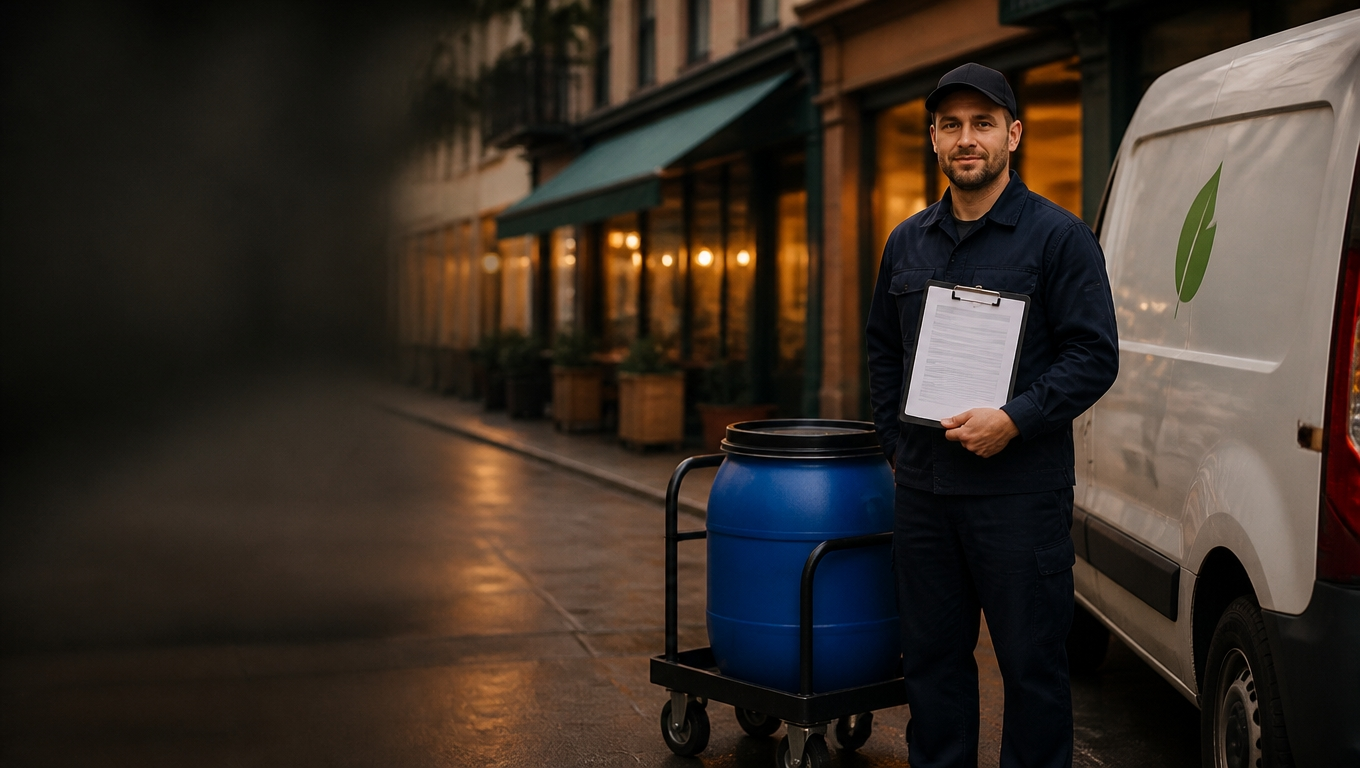
What is digital waste tracking?
Until now, the UK has tracked waste on paper. A waste transfer note is filled in at collection, a copy goes in a folder, and the regulator only sees it if they ask. That gap is exactly where waste crime lives: oil that is collected and never arrives anywhere legitimate, or loads that are described as one thing and turn out to be another.
Digital waste tracking closes that gap. It is a single online service, run by Defra with the Environment Agency, Natural Resources Wales, SEPA and DAERA. It records every load of waste from the moment it is received. It is backed by law: The Digital Waste Tracking (England) Regulations 2026 and the matching Welsh regulations.
It is being brought in in phases:
- Receiving sites in England and Wales: mandatory from 1 October 2026 (now live)
- Receiving sites in Scotland and Northern Ireland: January 2027
- Waste carriers, brokers and dealers: October 2027 (planned), with a public beta from spring 2027
- Waste producers such as restaurants, pubs, takeaways, schools and hospitals: no date set yet
We're already doing it: our experience as a receiving site
Bio UK Fuels isn't just a collector. Our depot in Sheffield holds an environmental permit (EPR/GP3623PJ) to receive and process used cooking oil, so we fell into Phase 1. Since 1 October 2026, every load of oil that comes through our gates has to be reported to Defra within 2 working days.
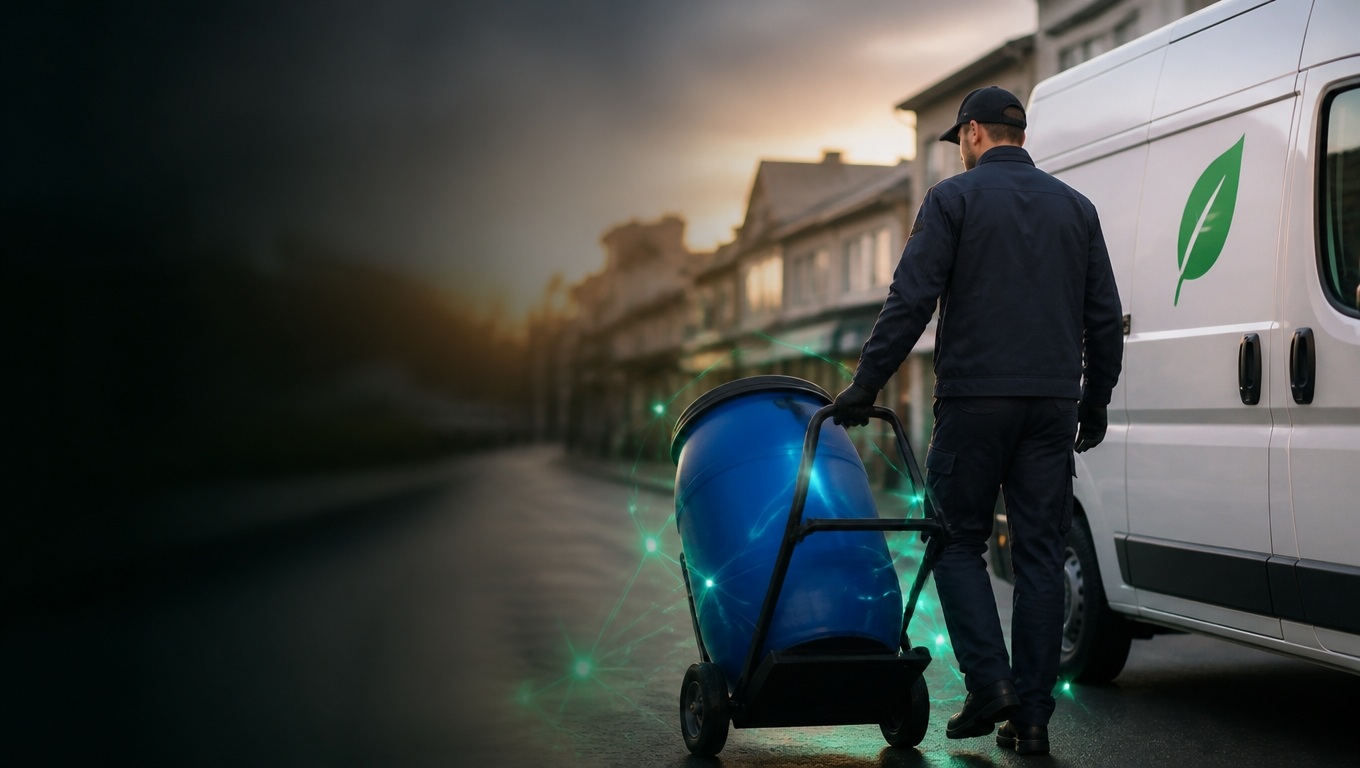
We saw this coming a long time ago, and we didn't want to bolt a government spreadsheet onto the side of how we work. So we built our own software. When our driver collects your oil, the details are captured on the spot: who you are, where the oil came from, how much there was and its waste code (EWC 20 01 25, edible oil and fat). When that oil is received at the depot, the record goes straight to Defra's system. Nobody retypes anything, and nothing sits in a pile of paperwork waiting to be keyed in.
The honest lesson from our first month is that the reporting itself is the easy part. The hard part is the quality of the information you start with. A wrong postcode, a missing business name or a vague waste description on a collection all have to be fixed. Under the rules, any error must be corrected within 2 working days of being flagged. That's why we capture everything digitally at the kitchen door rather than on paper.
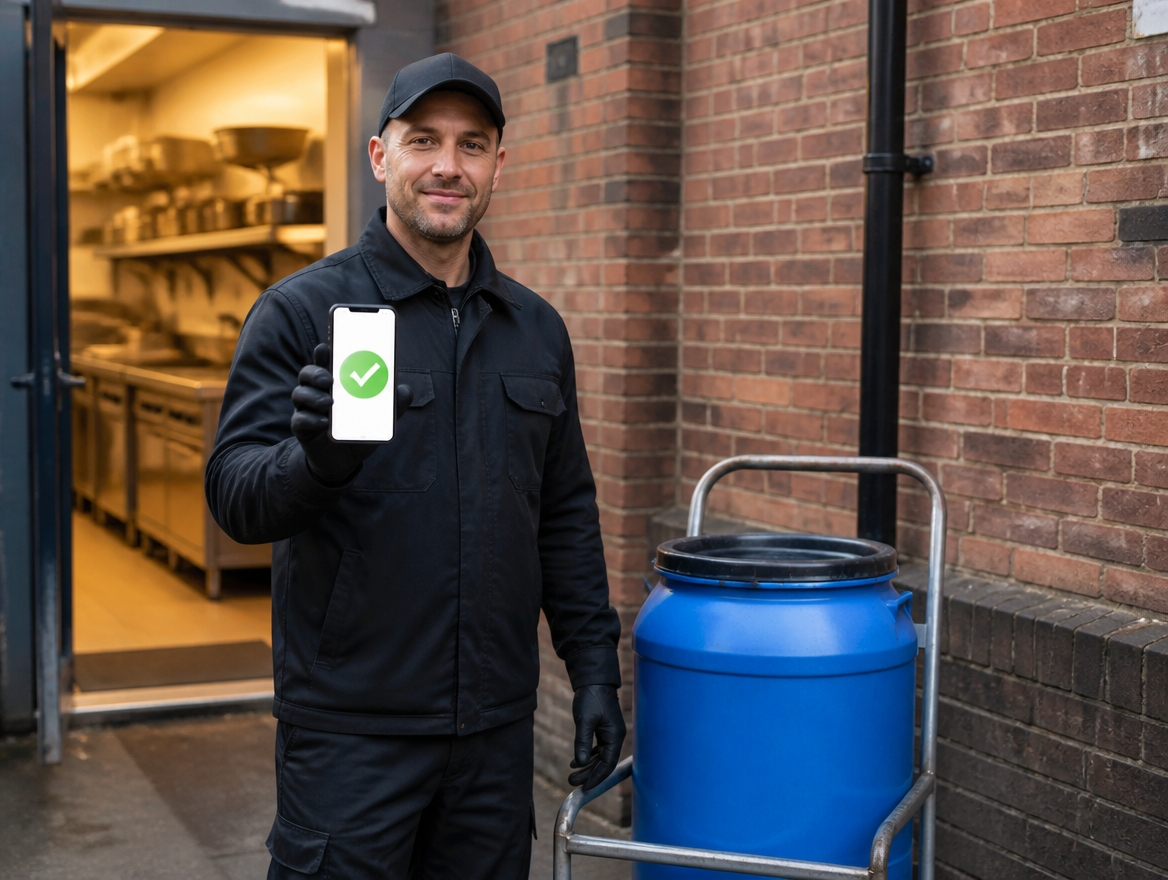
What digital waste tracking means for your kitchen
If you run a restaurant, pub, takeaway, café, school kitchen or care home, here is where you stand.
You don't need to register or report anything yet
There is no mandatory date for waste producers. Food businesses do not need to sign up to the service or submit any data at the moment.
Your waste transfer notes still matter
Paper isn't going away yet. The government has confirmed that waste transfer notes continue to run alongside the new digital system. Your legal Duty of Care is unchanged. You still need a valid waste transfer note for your used cooking oil, and you must keep it for at least two years. Ours are issued with every collection.
Read more in our guide to how to dispose of used cooking oil legally.
Your collector's details now end up in a government system
This is the real change for food businesses. Information about your oil now ends up in a national record that regulators can see. If your collector is unlicensed, or your oil disappears between your back door and a legitimate site, there will be a hole in that record. That makes it much harder for rogue operators to hide, and much easier to see who handled your waste properly.
The practical step is simple: make sure whoever collects your oil holds a waste carrier licence and takes it to a permitted site. Ours is CBDU199369, and you can check any licence on the Environment Agency's public register.
Watch out for oil theft and cash-in-hand collectors
Every year we see kitchens approached by people offering cash for oil with no paperwork. Digital waste tracking makes that a worse deal than ever. If your oil turns up somewhere it shouldn't, the paper trail starts with you. Stick to a licensed collector who gives you documentation every time.
What's coming in October 2027: waste carriers
Phase 2 is the bigger change. From October 2027, waste carriers, brokers and dealers are planned to come into the system. That includes:
- skip hire and man-and-van operators
- scrap metal collectors
- house clearance businesses
- specialist collectors like used cooking oil firms
- many small operators running one or two vans on paper job sheets
For a lot of these businesses, especially smaller ones, it will be the first time they have had to keep digital records of every job. Defra plans a public beta from spring 2027, so there is time to prepare, but not much.
Going through Phase 1 ourselves showed us how much work sits behind getting it right. So I've set up a separate company, Digital Waste App, to build the same kind of software for other waste businesses. It is aimed particularly at smaller carriers in every sector who will need to start reporting in October 2027. If you run a waste business, or know someone who does, it's worth a look at digital waste tracking software built by a waste operator.
To be clear for our oil customers: nothing changes in how Bio UK Fuels collects from you. Digital Waste App is a separate business. Your collections, paperwork and rebates carry on exactly as before.
What happens if receiving sites don't comply?
The penalties for sites in scope are serious. Not reporting on time, failing to correct errors or keeping inaccurate records is an offence. A site could face:
- a fixed penalty of £1,000
- a variable penalty of an unlimited amount
- criminal prosecution and an unlimited fine
- up to 2 years in prison for knowingly making false records
For food businesses, the point isn't the penalties. It's that your collector has every reason to get your details right. That is good news for kitchens who want to know their oil is handled properly.
Your checklist as a food business
- Check your oil collector holds a current waste carrier licence.
- Make sure every collection comes with a waste transfer note, and keep them for at least two years.
- Give your collector accurate details: your business name, full address and postcode, and a contact.
- Don't hand oil to anyone offering cash with no paperwork.
- Keep an eye out for an announcement of a date for waste producers. We'll update this guide when one is set.
If you'd like a collector who's already reporting digitally, with full Duty of Care paperwork on every collection, book a free collection. We pay rebates on 100 litres or more.
Frequently asked questions
Filed under:Cooking Oil Disposal

Written by
Martin SimpkinsCo-founder of Bio UK Fuels in 2008. With 18 years in the industry, Martin helps commercial kitchens recycle used cooking oil legally and turn it into biodiesel.
More articles by Martin →Need your used cooking oil collected?
Free collection across England & Wales, and we pay you for 100 litres or more. Full Duty of Care paperwork every time.