What is a grease trap?
A grease trap, also called a fat trap, grease interceptor or grease separator, is fitted to the drainage from your sinks and dishwashers. Its job is to stop fats, oils and grease (FOG) from washing up reaching the public sewer.
It works on a simple principle:
- Warm washing-up water flows into the tank and slows down.
- As it cools, fat rises and floats on the surface.
- Food scraps and solids sink to the bottom.
- The water in the middle flows out to the sewer.
There are three main types:
- Passive grease traps: a sealed tank under the sink or in the floor. Fat builds up until a contractor empties it.
- Larger grease interceptors: bigger tanks, often outside or underground, for busy sites.
- Grease removal units (GRUs): automatic units that heat and skim the fat off into a separate container, which usually needs emptying every day.
Building Regulations guidance for England and Wales (Approved Document H, paragraph 2.21) says drainage serving kitchens in commercial hot food premises should be fitted with a grease separator, or other effective means of grease removal (Welsh Government, Part H guidance).
Why a grease trap is really a water trap
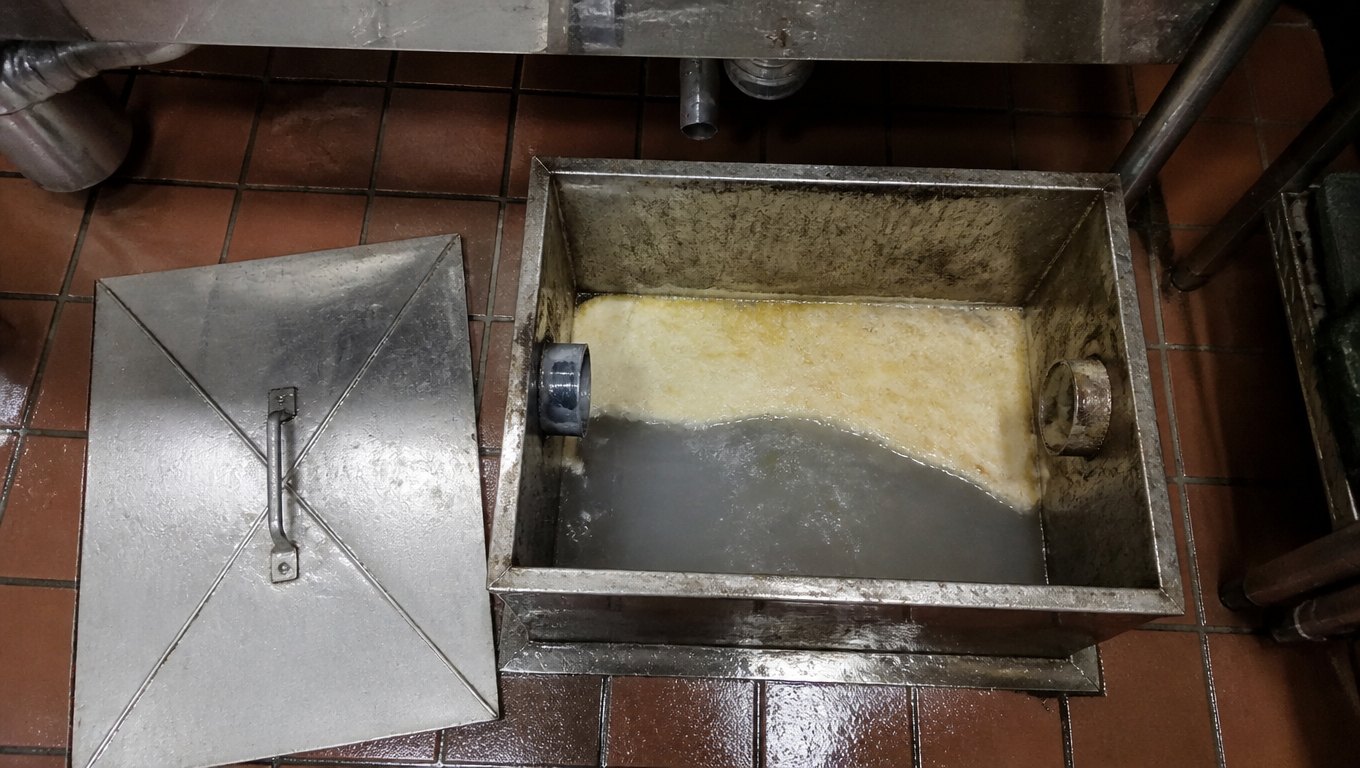
I've been collecting used cooking oil from commercial kitchens since 2008, and I often say a grease trap would be better named a water trap.
Open one up and you'll see why. Most of what's inside is water, with a layer of fat floating on top and sludge at the bottom. The trap only separates the fat that comes off plates, pans and utensils during washing up. That's a small amount of fat in a large amount of water.
This matters for two reasons.
First, it shows what a grease trap is for. It's a last line of defence for the fat you can't avoid washing off, not a disposal route for oil.
Second, it's why we generally don't collect grease trap waste. Some oil collectors do, but as a source of oil it's almost worthless. We've collected it in the past, and the most oil we've ever found in a load was around 10%, often much less. The rest is food waste and water, and it stinks.
That makes it a job for companies that handle sewage and drainage waste, or for anaerobic digestion plants, which turn the food waste into biogas. It's also a different waste stream from used cooking oil. Grease trap waste is usually classed as EWC 19 08 09, a grease and oil mixture from oil and water separation, while used cooking oil is EWC 20 01 25.
So if a collector offers to take your grease trap waste and your fryer oil together, ask where each one goes. They're very different materials, and your fryer oil is the one with value.
Why fryer oil must never go into a grease trap
Some kitchens assume that having a grease trap means they can pour old fryer oil down the sink. They can't, for three reasons.
It overwhelms the trap
A fryer change can mean 20 litres or more of oil in one go. A grease trap is sized for washing-up water, not that. Hot oil in large volumes doesn't have time to cool and separate, so much of it flows straight through and sets hard further down the pipe. Thames Water is clear that a basic unit isn't enough unless it actually stops fat entering the sewer (Thames Water, September 2026).
It's still against the law
It's an offence under the Water Industry Act 1991 to put anything into a sewer that can stop it flowing freely. A grease trap doesn't change that. Fats, oils and grease cause more than 20,000 sewer blockages a year in Thames Water's area alone, and the company has prosecuted businesses for it, with fines and costs totalling over £50,000 in the past five years. In 2021, pub group Mitchells & Butlers was fined £75,000 after fat from one pub repeatedly blocked sewers (Thames Water).
You're pouring money away
Used fryer oil has real value, because it's made into renewable fuel. Pour it down the drain and you pay for it twice: in more frequent grease trap emptying, and in the rebate you've lost. Bio UK Fuels collects free from 60 litres and pays a rebate from 100 litres upwards.
Do you need a grease trap?
If you run a commercial kitchen that cooks hot food, probably yes.
- New builds and refits: Building Regulations guidance expects a grease separator, or another effective way of removing grease, on drainage from commercial hot food kitchens. Your building control body will check this.
- Existing kitchens: your water company can visit and ask you to fit grease management equipment if fat from your site is reaching the sewer. Thames Water's team made more than 19,000 visits to food businesses in a year, and more than 2,500 installed fat traps as a result.
If you're not sure, ask your water company. Most have a team that works with food businesses on fats, oils and grease.
Looking after your grease trap
A grease trap only works if it's maintained. The basics:
- Scrape plates and pans into food waste before washing them.
- Wipe greasy pans with kitchen roll first.
- Use sink strainers to catch food scraps.
- Don't flush fat through with very hot water or chemicals. It just moves the problem further down the pipe.
- Have the trap emptied and cleaned regularly by a licensed waste contractor. How often depends on its size and how busy you are, so follow the manufacturer's and contractor's advice.
- If you have a grease removal unit, empty its fat container every day.
- Keep records and receipts for every service and emptying. Welsh Water's guidance for food businesses says you'll be asked to provide proof (Dŵr Cymru Welsh Water).
Grease in your extraction system is a separate problem, and a serious fire risk. Read our guide on which fire extinguisher to use for cooking oil for more on that.
Grease trap or oil collection? You need both
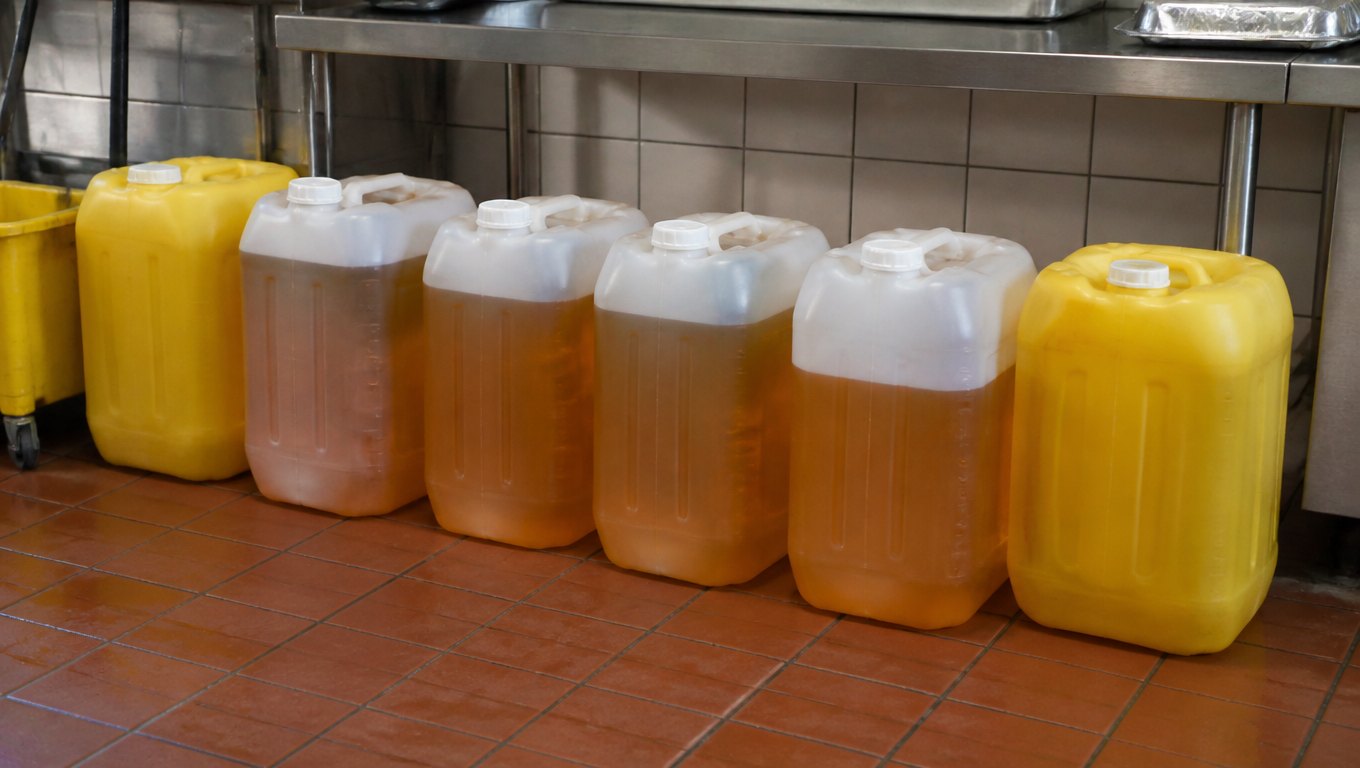
A grease trap and used cooking oil collection do different jobs. Most commercial kitchens need both.
| Comparison | Grease trap | Used cooking oil collection |
|---|---|---|
| What it handles | Small amounts of fat in washing-up water | Used fryer and cooking oil |
| What's collected | Mostly water and food waste, with 10% oil at most | Oil |
| Waste code | EWC 19 08 09 | EWC 20 01 25 |
| Who removes it | Drainage or sewage waste contractor, or an anaerobic digestion site | Licensed oil collector, like Bio UK Fuels |
| Cost to you | You pay for emptying | Free from 60 litres, with a rebate from 100 litres upwards |
| Paperwork | Waste transfer note and service records | Waste transfer note at every collection |
The more oil you keep out of the sink, the less work your grease trap has to do, and the less often you pay to have it emptied.
For the full rules on oil, read our guide on how to dispose of used cooking oil and what your waste transfer note for used cooking oil should include. Keeping fat out of your drains also helps your food hygiene rating.
Grease trap checklist
- A grease trap or grease removal unit on the drainage from sinks and dishwashers.
- Emptied and serviced regularly by a licensed contractor, with records kept.
- Plates and pans scraped and wiped before washing.
- No fryer oil, cooking oil or fat ever poured into a sink, drain or grease trap.
- Used oil stored in sealed containers and collected by a licensed waste carrier.
- Waste transfer notes kept for at least 2 years.
Bio UK Fuels takes care of number 5. Arrange a free used cooking oil collection anywhere in England and Wales, or see what your oil is worth.
Sources
- Welsh Government, Building Regulations Part H guidance (Nov 2023), paragraph 2.21 grease separators, same wording as England's Approved Document H
- Thames Water (3 Sept 2026): 20,000+ FOG blockages a year, 19,000 visits, 2,500 fat traps installed, prosecutions over £50,000, basic unit not enough
- Thames Water (June 2021), Mitchells & Butlers £75,000
- Dŵr Cymru Welsh Water, Keep your pipes flowing: traps emptied by licensed contractor, GRUs emptied daily, keep records
- EWC 19 08 09 description
Frequently asked questions
Filed under:Cooking Oil Disposal

Written by
Martin SimpkinsCo-founder of Bio UK Fuels in 2008. With 18 years in the industry, Martin helps commercial kitchens recycle used cooking oil legally and turn it into biodiesel.
More articles by Martin →Need your used cooking oil collected?
Free collection across England & Wales, and we pay you for 100 litres or more. Full Duty of Care paperwork every time.